
The Broken City Theory
The Broken Windows Theory, introduced in the 1980s by James Q. Wilson and George L. Kelling, posits that visible signs of disorder—like broken windows, graffiti, or litter—signal neglect, inviting worse crime. It was practical, no-nonsense: enforce the small stuff, and you stop the slide into chaos. Communities thrive when standards hold, and it worked—New York City’s ‘90s turnaround under Giuliani saw murders plummet from 2,245 in 1990 to 767 in 2000 as petty crimes got policed hard. Decades later, that logic feels like a relic on the West Coast. Fast forward to 2025, and stroll through San Francisco, Portland, or Seattle...
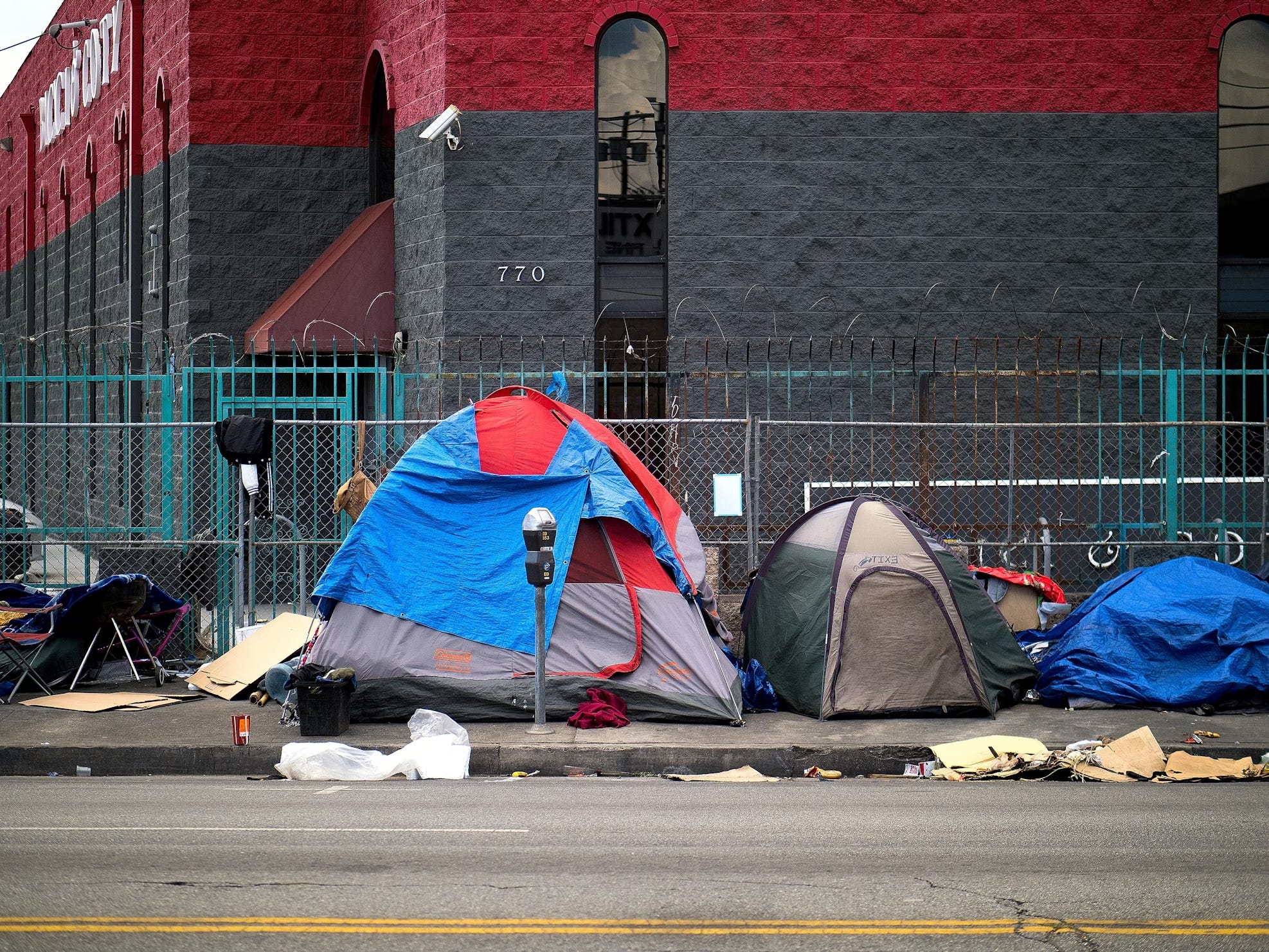
The contrast is brutal: homeless encampments choke sidewalks, needles litter streets, and open drug use is routine. It’s Broken Windows in reverse—call it “Broken Cities.” Where the theory demanded proactive policing, today’s progressive playbook shrugs at decay. Shrinking police budgets, soft prosecution of minor offenses, and a hands-off stance on addiction let disorder fester.
The fallout? Property crime soared—Seattle’s jumped 20% in 2023 after budget cuts—and overdose deaths hit records. Businesses bolt, families flee, and blight takes root.
Broken Windows saw disorder as a red flag to fix—repair the window, ticket the loiterer, arrest the vandal. Today’s West Coast reality treats it as a fixture to tolerate, decriminalizing hard drugs (like Oregon’s Measure 110) and pouring cash into harm reduction—free needles, safe injection sites—while tents multiply.
This isn’t mercy; it’s surrender.
San Francisco’s homeless count stalled at 8,000 in 2024 despite billions spent, with over 800 overdose deaths in 2023. Portland’s homicides doubled from 2019 to 2022. Coddling addiction and lawlessness breeds more of it.
Yet, there’s overlap worth noting. Both conceptual frameworks grapple with how environment shapes behavior. Broken Windows says clean it up to lift people up; the current West Coast experiment bets on meeting people “where they’re at,” even if that’s a gutter. I contend that this as simply enabling; look at the rising crime rates—Portland’s homicides doubled from 2019 to 2022—and acknowledge that feeling that coddling addiction and lawlessness breeds more of it. The theory’s old-school toughness aimed to protect communities; today’s permissiveness sacrifices them for ideology. The data says tolerance is losing.
In short, Broken Windows was about order as a foundation for progress. West Coast cities in 2025 feel like a rejection of that, betting on tolerance over discipline, and the bet’s not paying off. Just walk downtown and count the tents.
Now to address likely challenges.
Progressives will likely challenge the above with a mix of moral and practical arguments, rooted in their view of systemic causes and compassion-driven policy. Their primary pushback would probably be: The Broken Windows Theory oversimplifies complex social issues like homelessness and addiction, blaming individuals instead of addressing root causes—poverty, housing shortages, and inequality—while today’s approach tackles those deeper problems rather than just punishing symptoms.
They’ll argue that Broken Windows-style policing—cracking down on petty crimes like loitering or public drug use—doesn’t fix anything; it just shuffles the problem around. Homeless addicts don’t vanish with a ticket or arrest; they’re back on the street in hours, now with fines they can’t pay or a record that locks them out of jobs and housing. Data might get trotted out: a 2021 UCLA study showed LA’s anti-camping laws displaced people without reducing homelessness. They’d say West Coast cities aren’t “surrendering”—they’re investing in housing-first models and harm reduction, like San Francisco’s $1.2 billion 2024 budget for homeless services, because criminalizing poverty is cruel and ineffective.
They’ll also hit the equity angle hard: Broken Windows disproportionately targeted minority and low-income communities, feeding mass incarceration without solving addiction or mental illness. Today’s decriminalization (e.g., Oregon’s Measure 110) and safe-use sites aim to save lives—overdose deaths might be high, but they’ll argue they’d be worse without intervention. My “tough love” nostalgia, they’ll say, ignores how Giuliani’s NYC relied on a booming economy and gentrification, not just policing, to clean up.
I’d counter that Progressives are dodging accountability for their policies’ failures. Housing-first sounds noble, but San Francisco’s spent billions—$2.8 billion from 2018-2022—while homelessness barely budged and tent cities grew. The UCLA study proves displacement, sure, but it doesn’t prove coddling works better—crime and overdoses keep climbing. Compassion’s great, but when overdose deaths hit 800+ in SF in 2023, and Portland’s retail thefts surge post-Measure 110, it’s fair to ask: who’s this helping? Enabling addiction isn’t mercy; it’s abandoning people to die slower.
On equity, let me flip that for you: disorder hits poor neighborhoods hardest—progressive tolerance leaves them with the needles and break-ins, not the wealthy enclaves pushing these policies from their behind-the-gate safety. NYC’s turnaround wasn’t just luck; it was order signaling safety, drawing investment. West Coast cities signal the opposite—businesses flee, taxes soar, and residents get stuck with the tab for a social experiment that’s failing. Root causes matter, but ignoring visible decay doesn’t fix them; it makes them worse.
Progressives will lean on systemic injustice and empathy, framing my opinion as callous and outdated. They’ll say Broken Windows was a Band-Aid; their way is surgery.
I say, that surgery’s botched if the patient’s still bleeding out—order is a prerequisite, not a distraction.
Data’s messy on both sides, but the optics of tent-lined streets give the right’s critique an edge in the gut-check department.
The bottom line is inescapable: we’re going to have to spend our way out of this crisis, but the current channels—endless budgets for harm reduction and scattered housing initiatives—aren’t cutting it. West Coast cities prove the money’s flowing, yet the streets stay choked with tents and despair. It’s time to redirect those dollars into pulling these people out of their poisoned existence, whether they volunteer or not, and place them, at our cost, into treatment or jail as their situation demands. Then, we must commit to the long haul—sustained oversight, care, and expense for the remainder of each addict’s life. Anything less is just kicking the can down a needle-strewn road, and we’re too far gone for that.
I watched this clip tonight about the raids that are happening in LA; the retired FBI supervisory agent brought up Broken Windows and Giuliani; I was like — I just read about that in your article! https://youtu.be/Brd_3C1DXWo?si=FkCfm7-7LYDz95Qp