
The Potemkin Walkway
Civic Decay, Leftist Apologetics, and the Sovereign Restoration of Order
A deeply telling proxy war is currently being waged over the physical and moral landscape of our local community. On one side, clear-eyed citizens are using digital media to document the stark reality of the homeless addiction crisis—exposing open-air drug markets, needles left on public transit platforms, and the visible destruction of human dignity on our sidewalks. On the other side, a second group of people is fighting back by posting videos of clean streets and pathways. Their unstated but obvious objective is to signal a defensive, comforting narrative: “Look, the system is holding. The problem isn’t that bad.”
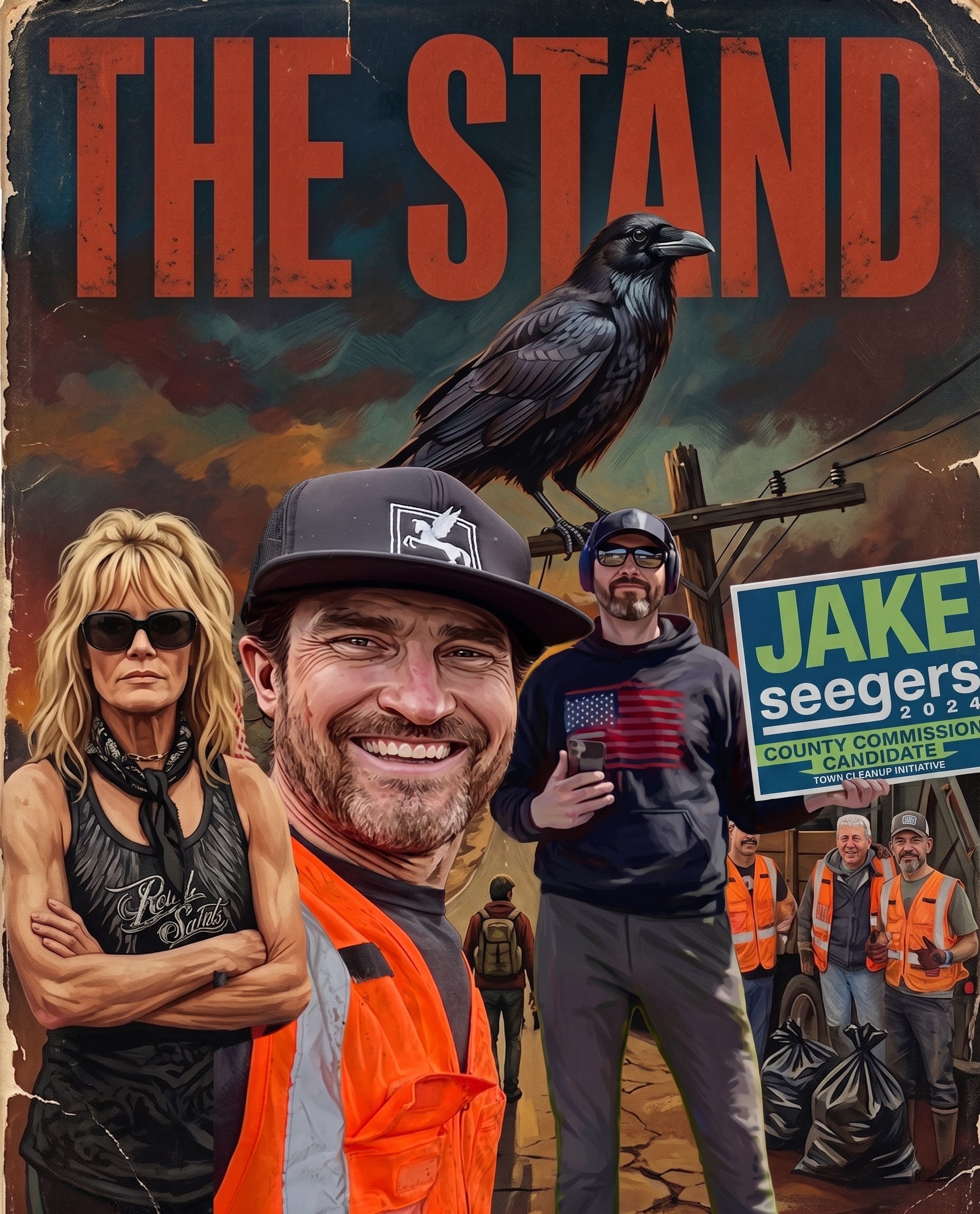
To the casual observer, this may look like an ordinary modern internet skirmish. To the traditionalist and the constitutionalist, however, it reveals a profound civilizational pathology. What we are witnessing is a modern adaptation of the “Potemkin village”—a desperate attempt by defenders of the political establishment to manufacture an illusion of order to obscure structural and moral collapse. Substituting “it’s not so bad” for an earnest, uncompromising pursuit of the Highest Good is a direct abdication of civic responsibility and a rejection of foundational truth.
The History of the Optical Illusion
To truly understand the psychological warfare embedded in these videos of clean walkways, we must revisit the historical origins of the facade. In 1787, Field Marshal Grigory Potemkin reportedly erected fake, portable settlement facades along the banks of the Dnieper River to deceive Empress Catherine the Great during her journey to Crimea. The goal was simple: hide the desolate reality of a war-torn, impoverished landscape behind brightly painted cardboard cutouts of happy, prosperous villages. The Empress rolled past, insulated from the truth, reassured that her governance was flawless.
The modern progressive citizens filming isolated, immaculate paths are practicing a digital variation of this historic deceit. They are erecting a Potemkin Walkway. By pointing the camera exclusively at clean concrete, they seek to reassure themselves—and the broader public—that the foundational order of our society remains secure. They suffer from an intense status anxiety, fearing that if the curtain is fully pulled back, the community will succumb to a self-fulfilling prophecy of nihilism. They want to believe that lawlessness has not fully conquered our shared civic square, but they choose to preserve that belief through artificial optics rather than structural reform.
The Eradication of Standards and the Assault on Ordered Liberty
While protecting a town’s reputation is a natural human instinct, utilizing selective imagery to deny systemic lawlessness is a severe moral failure. It confuses the temporary absence of visible chaos with the actual presence of civic virtue. It treats public infrastructure not as a safe space for law-abiding families, but as a political shield for a failing municipal apparatus.
There is an unbridgeable gulf between mere status quo maintenance and upward moral aim. To argue that a community is healthy simply because certain pathways remain swept is to anchor the standard of justice to the absolute floor. It defines success not by flourishing or righteousness, but by the mere absence of absolute catastrophe.
In the Western traditionalist framework, true order is built upon truth, accountability, and the rule of law. Under the United States Constitution, government is instituted to secure a system of ordered liberty. This is a sacred social compact: citizens pay taxes, follow laws, and maintain their properties, and in return, the state guarantees that public spaces remain safe, clean, and orderly. Shifting the camera angle away from human tragedy and open-air drug distribution to capture an empty, clean sidewalk is an act of civic cowardice. It is the defensive response of a corrupt regime that points to its clean capital monuments while the outer provinces rot. You cannot restore a community by sweeping its moral and legal failures out of the digital frame.
Ideological Possession and Leftist Apologetics
We must look honestly at the underlying motivation driving this desperate desire to obscure the crisis. The root cause is ideological possession and the preservation of political power. Over the past several decades, local governance across our nation has been dominated by progressive, therapeutic policies. Traditional boundaries of law enforcement, public vagrancy restrictions, property rights, and individual accountability have been systematically dismantled in the name of a misguided, unconditional “compassion.”
The catastrophic results of these leftist policies are now written plainly on our streets. For the architects and defenders of this system to admit the depth of the encampment and addiction crisis would require an agonizing existential reckoning. It would mean admitting that their entire worldview is fundamentally flawed, and that their version of “compassion” has directly enabled the degradation of the most vulnerable. Because human brains process threats to their ideological identity with the same primal panic as a direct physical attack, they resort to censorship, deflection, and selective perception. They weaponize videos of clean pathways as political shields, choosing to protect their preferred narrative over the actual human lives dying in the shadows of those very pathways.
The Active Citizen vs. The Defensive Institutionalist
It is a critical error to treat this video contest as a symmetric stalemate where both sides are trapped in passive digital loops. A profound moral, spiritual, and practical asymmetry exists here. While the creators of the “clean walkway” videos are engaged in passive gaslighting—using digital media as an aesthetic shield to preserve failed institutional defaults—the citizens documenting the community’s ruin are leveraging exposure as a vital, diagnostic first step toward radical civic mobilization.
For these clear-eyed citizens, the lens is not a tool for digital voyeurism; it is an instrument of accountability and a declaration of war against civilizational decay. Confronted with municipal inertia and the collapse of public safety, they are transforming their outrage into institutional correction. They are running for local office to displace the entrenched progressive monoculture, stepping directly onto the ballot to reclaim municipal budgets and restore law enforcement. They are organizing grassroots volunteer networks, personally clearing biohazards and syringes from public parks, funding private green space restorations, and standing up neighborhood watches where local authorities have completely abandoned their posts.
They do not retreat into the safety of an ideology, nor do they look away when the landscape becomes horrifying. Instead, they stand directly in the breach between chaos and order. They look at the broken pieces of their town, accept the immense financial and personal burdens of restoration, and refuse to let the darkness claim their home.
They are doing what leaders and heroes have always done throughout the long, turbulent history of the Western tradition. Facing the wreckage, refusing to validate a lie, and bearing the weight of the community on their shoulders—they STAND.
This is the archetypal traditionalist response to societal decay: subsidiarity in action. When centralized systems fail, the responsibility devolves back to the sovereign individual, the family, and the local association. These reformers understand that exposing the dragon is the prerequisite to slaying it. They refuse to participate in a managed decline, choosing instead the rugged, exhausting path of civilizational renewal.
The Restoration of the Highest Good
The constitutional and traditionalist antidote to civilizational decay relies on two foundational pillars: the unwavering enforcement of objective law and the vigorous exercise of personal responsibility. We must reject the progressive narrative that individuals are merely helpless, deterministic products of their environment, entirely devoid of moral agency. Viktor Frankl’s psychological insight remains absolute: even in the absolute nadir of circumstance, man retains the radical freedom to choose his moral stance and his actions.
True progress—the data-driven improvement of human life—never occurs by pretending pathologies do not exist or by coddling behaviors that tear at the social fabric. It occurs when a population possesses the moral courage to measure its failures honestly, enforce its laws justly, and step forward to rebuild its broken intermediate institutions. The citizens fighting to expose the truth and physically repair their neighborhoods are the only ones demonstrating true upward aim. They are reclaiming the public square from the grip of ideological delusion, proving that order can always be restored when courageous individuals refuse to back down.
The Mandate: Reclaim Local Sovereignty
If we wish to achieve the Highest Good, we must fully reject the political optics of the “clean pathway.” True conservatism demands localized, boot-on-the-ground resistance to disorder. Support the reformers who are stepping into the arena—those funding cleanups, volunteering at the frontlines, and challenging corrupt municipal policies at the ballot box. Reclaiming our towns requires an unflinching allegiance to truth, a restoration of public order, and an unyielding commitment to the places we call home. When the institutions of the state falter, the sovereign citizen must stand.
This should be required reading for our city council and BOCC.
So good; and I love the image!